Established 2019
Structural pruning, canopy thinning, and clearance work done with proper collar cuts, never topping.
Pruning is where a lot of tree companies cut corners, literally. Flush cuts and topping look finished from the ground, and both set a tree up for decay, weak regrowth, and a much bigger problem three years from now.
Arborwise™ prunes at the branch collar, the way the work is actually supposed to be done, so the tree can seal the wound on its own. We thin for airflow and light without stripping the interior canopy, because over thinning stresses a tree just as badly as neglect. On young trees in newer neighborhoods, a little structural training now prevents the codominant stems and included bark that split a tree apart in a North Texas windstorm later.
All of it is done to ANSI A300, the American national standard for tree care. A300 is the document that defines where a cut is placed and what a written pruning specification has to state. It is the difference between a crew that shortens branches and a crew that prunes, and it is a fair thing to ask any company you are considering.
Source: ANSI A300 (Part 1), Tree, Shrub, and Other Woody Plant Management, Standard Practices (Pruning), the American National Standard for tree care operations. Part 1 sets the performance standards for pruning and guides how a written pruning specification is developed, and the A300 standards take authoritative precedence over previously existing tree care industry standards in the United States. Read the A300 standards. The full standard is sold rather than posted, so that link is the standards page rather than the document itself.
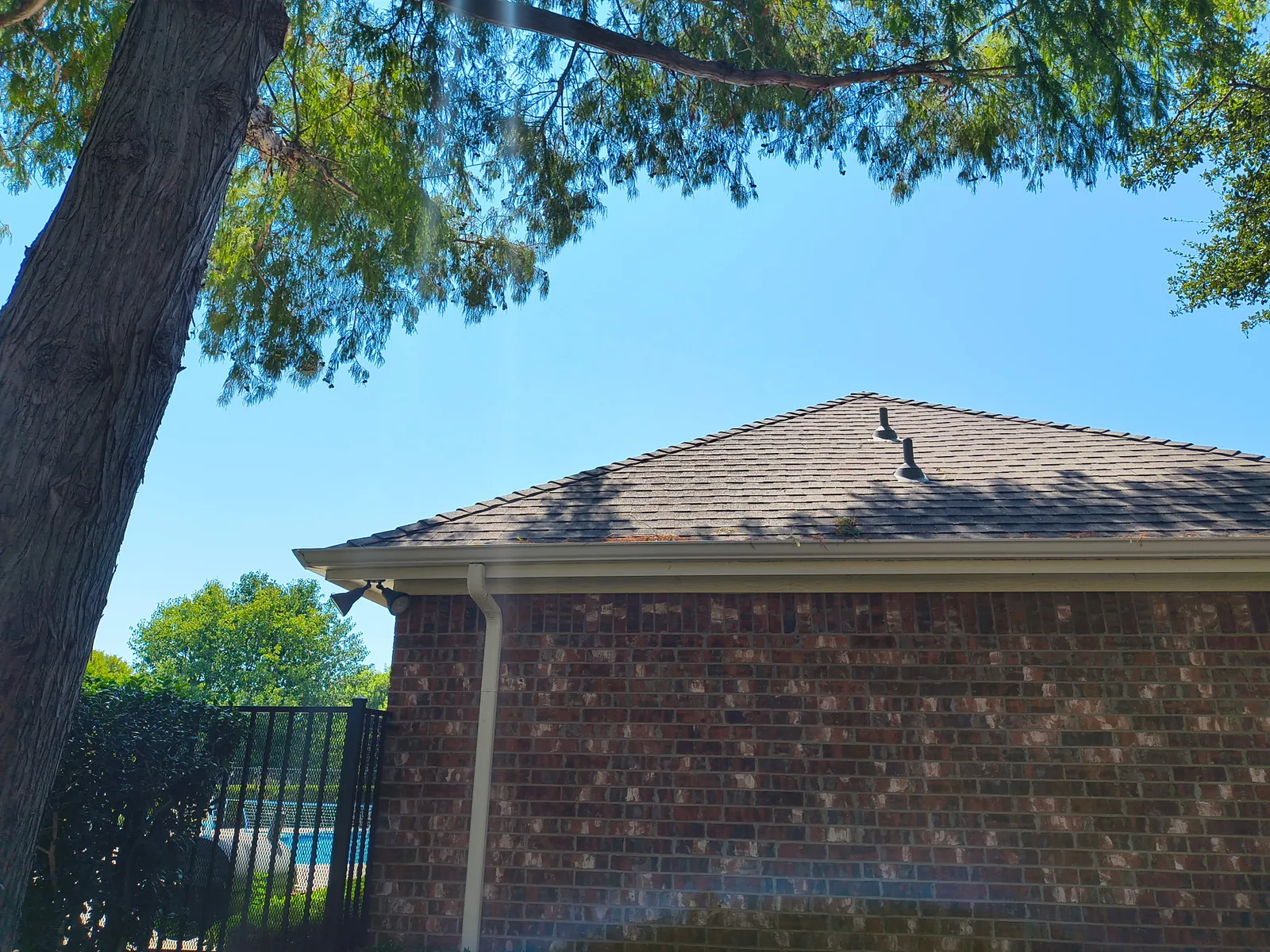
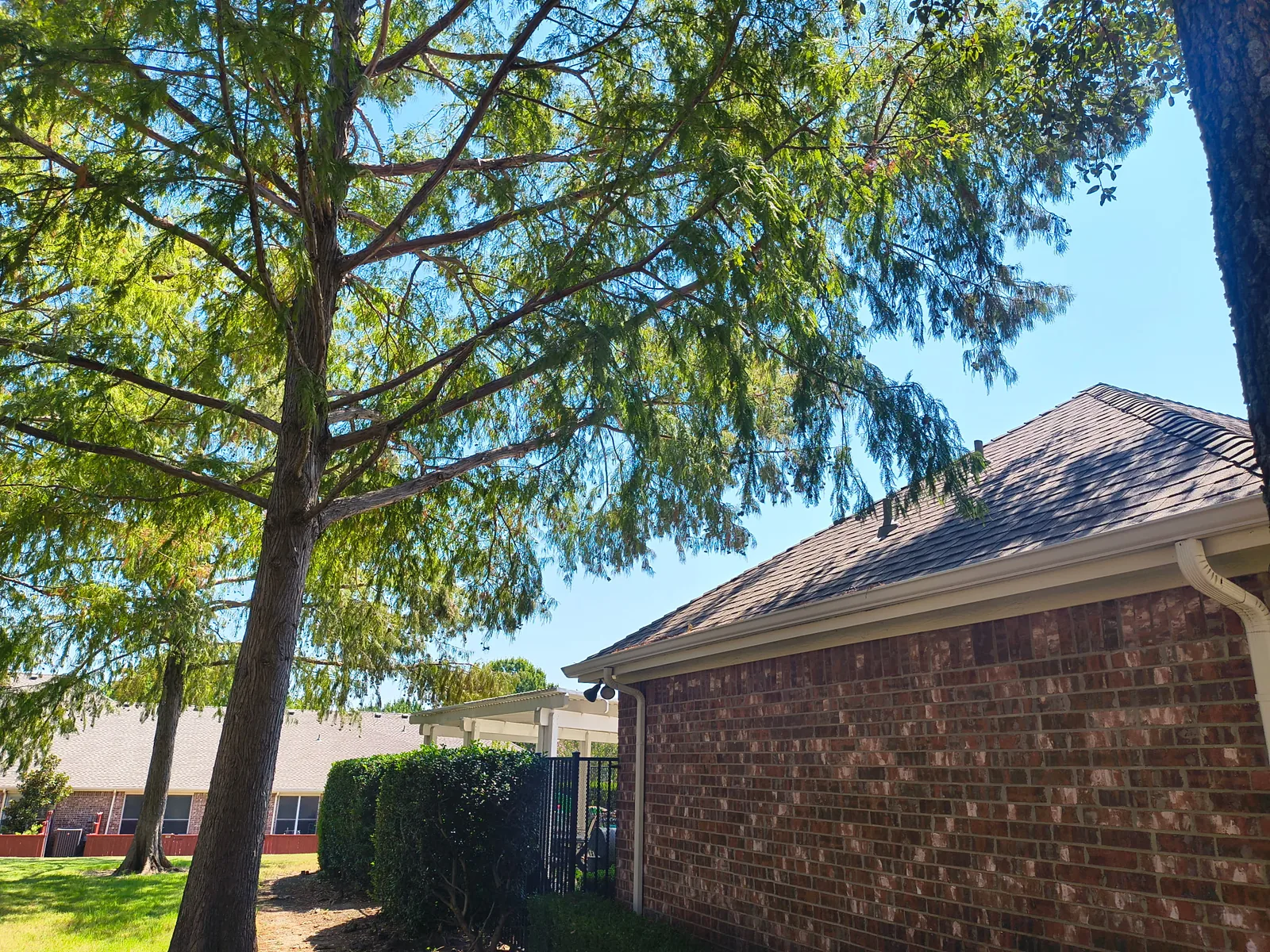

Topping removes the canopy a tree feeds itself with and leaves large wounds it cannot seal. What grows back are weakly attached shoots that break easily. It costs more over time, and it shortens the life of the tree. We will not do topping unless a client specifically asks us to. If you ask, we will tell you plainly what it does to the tree first, and then we will do what you ask, and we will do it the Arborwise™ way!
Source: Texas A&M Forest Service, Pruning, which notes that every pruning cut is a wound and that pruning done incorrectly can harm a tree and even shorten its life. Its mature tree guidance sets a ceiling of no more than 25 percent of the crown removed at one time, because taking too much canopy starves the tree and increases stress.
Dormant season, roughly winter, is ideal for most species here. That said, dead and hazardous limbs come off whenever we find them, and storm damage never waits for a good season.
Yes, we can. What we would usually recommend first is a light prune now: the large deadwood out, clearance off the house, and the tree cleaned up so it looks good. Then in the winter we come back and really get up in there. Here's why. Oak wilt spreads when sap beetles carry spores to fresh cuts on healthy oaks, and those beetles are most active February through June. Dead wood and limbs rubbing a building are on the short list of cuts Texas oak wilt guidelines allow in that season, and a light prune keeps fresh cuts into live wood to a minimum. The heavy work waits for the dormant months, November through January, when the beetles are mostly quiet, and the winter job ends up smaller for it. Tell us which way you want to go and we'll take care of it.
Source: Texas Oak Wilt pruning guidelines for preventing oak wilt, on the February through June window, the in-season exceptions, and dormant season as the ideal time to prune.
Most established shade trees here do well on a cycle of three to five years. Younger trees benefit from lighter, more frequent structural pruning while their shape is still being set.
No. Since 2019 we have never charged a customer more than we quoted. If a job takes longer than we figured, that is our miss, not your bill. The only time your number changes is when you say so. If you decide you want more done while we are there, that is a separate line, and we agree on it before anyone touches it. And if we find something the estimate could not have accounted for, you hear about it that day, before any work continues.
“Knowledgeable, skilled, kind and respectful.”
Was worried about cost at first, but said the care taken with her trees, yard and cleanup made it worth it.
“Amazing service, 5/5 no notes.”
The problem got handled and the crew was easy to be around.
“They always do a fantastic job.”
Called out Greg and the team for a smooth, professional process and competitive pricing.
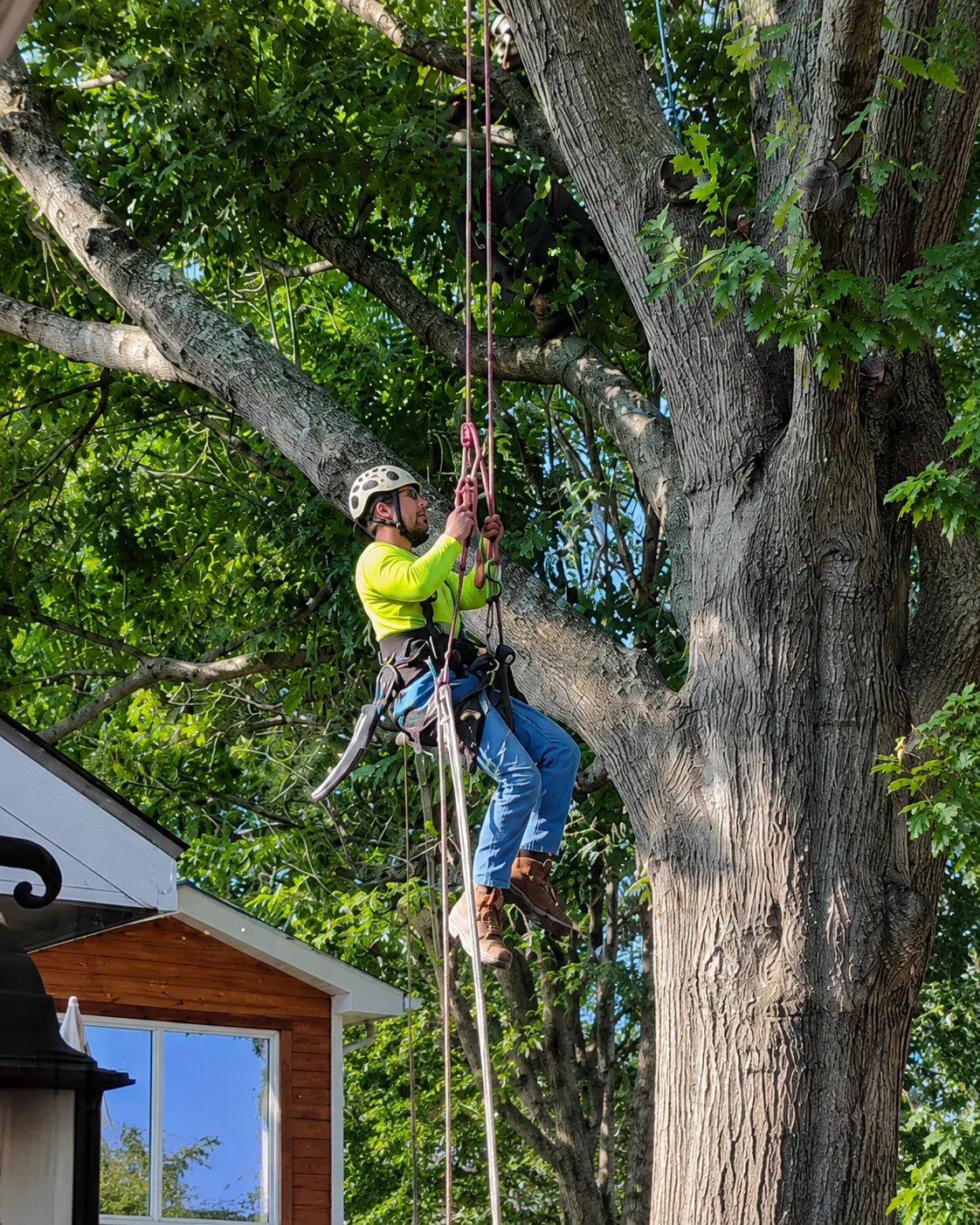
Tree removals done right, the Arborwise™ Way! Proper PPE and a crew that has carefully plotted exactly where this tree was supposed to hit the ground, and it did!
Learn more about tree removalStructural support for split leaders and heavy limbs, so that tree usually sticks around for years to come.
Learn more about tree cabling and bracingThe right tree in the right spot, planted at the right depth. Planting too deep is one of the leading reasons new trees die. Get that right and it usually takes off from there.
Source: Texas A&M Forest Service, Planting, on planting too deep as a leading cause of death in newly planted trees.
Call, text, or send us a couple photos of the tree. We always try to answer our own phone, and estimates are always free.