Established 2019
Sherman's oldest streets are named after the trees folks found when they started settling. A lot of those trees are still standing, with canopies and other tree parts quietly asking for attention.
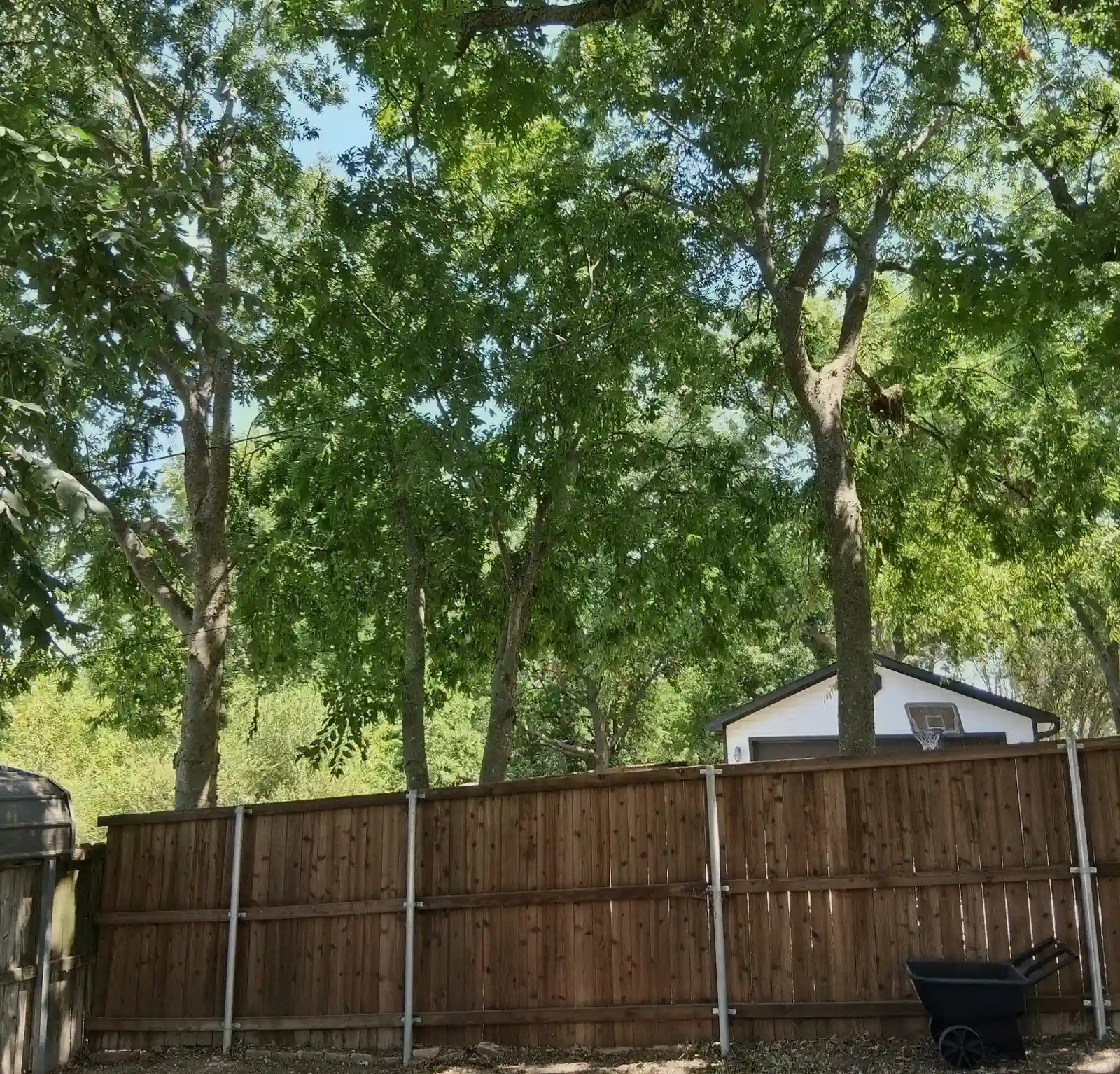
Those are Sherman street names, and they are not decoration. When the town was laid out, twelve year old Julia Shannon, whose father donated the land the town sits on, was given the job of naming the streets, and she chose Texas heroes and native trees.
Sherman has been the seat of Grayson County since the county was cut from Fannin County on March 17, 1846, and it later became a stop on the Butterfield Overland Mail route. That is a long time for a town to grow trees, and it shows. The established neighborhoods carry mature canopy that most newer North Texas suburbs will not have for another forty years, and it is worth real money to the people who own it.
Grayson County is also the reason we do not treat Sherman like a Collin County job. The soils genuinely change up here. The northern part of the county, draining toward Lake Texoma and the Red River, runs to acidic Post Oak Belt soils with loamy or sandy surfaces. The southern part, draining toward the Trinity, is blackland that grows post oak, bois d'arc, elm and walnut. Different soil, different root behavior, different drought response, and different species mix from what we see down in Farmersville.
Post oak in particular deserves a warning. It is one of the least forgiving trees in North Texas when it comes to disturbance. Grading, trenching, a driveway extension, even parking equipment over the root zone through a wet season can start a decline that does not show up in the canopy until two or three years later, and by then it is often too late to reverse. If you have a big post oak and you are planning any work near it, the cheapest phone call you will ever make is the one before the equipment shows up.
The rest is the same as anywhere we go. We inspect the whole tree, root flare included, before recommending anything. If you are not sure whether a Sherman tree needs anything yet, send us a couple of photos and we will have a look. We do not top trees. And we will tell you when a tree does not need work yet, which is not the fastest road to success for a tree company but it is the reason people continue to have us back every year. The right work, done right.
EMERALD ASH BORER. It's confirmed in Grayson County, and the county is under quarantine, which restricts moving ash wood and nursery stock out of it. If you have an ash tree in Sherman, that's worth knowing now rather than later. Usually the first sign is the top of the canopy thinning out, then shoots coming out low on the trunk, and by the time you can see it from the driveway the tree has been fighting it a while. Whether it's worth treating, and what that would take, depends on how far along it is. That's a conversation to have standing in front of the tree, not over the phone. Walking your ash and telling you which one you have costs you nothing.
Source:
 Texas A&M Forest Service, Emerald Ash Borer, 40 confirmed Texas counties as of June 2026. Quarantines are set by the Texas Department of Agriculture.
Tree removals done right, the Arborwise™ Way! Proper PPE and a crew that has carefully plotted exactly where this tree was supposed to hit the ground, and it did!
Learn more about tree removalStructural pruning, canopy thinning, and clearance work done with proper collar cuts, never topping.
Learn more about tree trimming and pruningStructural support for split leaders and heavy limbs, so that tree usually sticks around for years to come.
Learn more about tree cabling and bracingThe right tree in the right spot, planted at the right depth. Planting too deep is one of the leading reasons new trees die. Get that right and it usually takes off from there.
Source: Texas A&M Forest Service, Planting, on planting too deep as a leading cause of death in newly planted trees.
Also available: stump grinding, plus storm damage response for genuine emergencies.

Reviews from clients across our North Texas service area.
“Knowledgeable, skilled, kind and respectful.”
Was worried about cost at first, but said the care taken with her trees, yard and cleanup made it worth it.
“Amazing service, 5/5 no notes.”
The problem got handled and the crew was easy to be around.
“They always do a fantastic job.”
Called out Greg and the team for a smooth, professional process and competitive pricing.
The same six standards on every job, whether it is one limb or a full removal.
Safety is not optional on an Arborwise™ job. Required PPE, proper rigging, controlled cuts, and a crew that speaks up the moment something looks unsafe. No job is worth someone getting hurt.
Doing it right sometimes takes longer. We do not rush an unsafe cut, skip PPE, or leave a bad cleanup because it is faster. Good tree work is deliberate.
Every yard belongs to someone who trusted us to be there. We protect your driveway, your landscaping, and your trees with the right cuts and the right decisions, not just the fastest ones.
We keep our equipment maintained, our loads secure, and we pick up the small sticks most crews leave behind. We leave every property better than we found it.
Arborwise™ is a crew, not a collection of individuals. We communicate, watch for hazards, and speak up for one another on every single job.
The Arborwise™ Way is not always the fastest way. It is the right way, even when it takes longer, and even when nobody is watching.
Sherman is a scheduled service area for us, not a place we visit when we happen to be nearby. We will tell you honestly if we are backed up.
Estimates are free, wherever you are in our service area. Drive time is one of the things that goes into pricing any job, so it is already accounted for in the number we hand you rather than added on afterward. And that number is the price. Since 2019 we have never charged a customer more than we quoted.
Post oak is unusually sensitive to root disturbance, and the decline usually starts long before you notice it. Grading, trenching, a new driveway or patio, or heavy equipment parked over the root zone can all do it, and the canopy may not show the damage for two or three seasons. Thinning at the top of the crown, smaller leaves than the neighbors, and dieback starting at the branch tips are the signs. Get it looked at early, because once a post oak is well into decline the options narrow fast.
Usually not. Size and age are not defects. What matters is how sound the wood is, whether there is a weak fork or included bark, and what is underneath if part of it failed. A lot of big trees can be kept with reduction pruning to take weight off the ends, or with cabling and bracing to support a union. We will tell you honestly which category yours is in.
Yes. We handle scheduled maintenance, hazard assessment, and planned replacement on a budget cycle, and we are used to coordinating with boards and managers.
No. Since 2019 we have never charged a customer more than we quoted. If a job takes longer than we figured, that is our miss, not your bill. The only time your number changes is when you say so. If you decide you want more done while we are there, that is a separate line, and we agree on it before anyone touches it. And if we find something the estimate could not have accounted for, you hear about it that day, before any work continues.
Call, text, or send us a couple photos of the tree. We always try to answer our own phone, and estimates are always free.