Established 2019
Bark coming away in sheets with a tan, olive or silver-gray powder underneath is a pattern we take seriously. It usually shows up on a tree that has been under stress for a while.
Hypoxylon is a fungus that lives quietly in a lot of healthy trees, oaks and pecans especially. It generally only takes over once the tree is already run down by something else.
Drought, root damage from construction or trenching, a buried root flare, or a few bad summers in a row can all do it. Once the tree loses the ability to hold the fungus back, it spreads under the bark, the bark blisters and falls away, and that powdery layer shows up on the wood underneath. Sometimes the trunk on that side looks like it has been sanded.
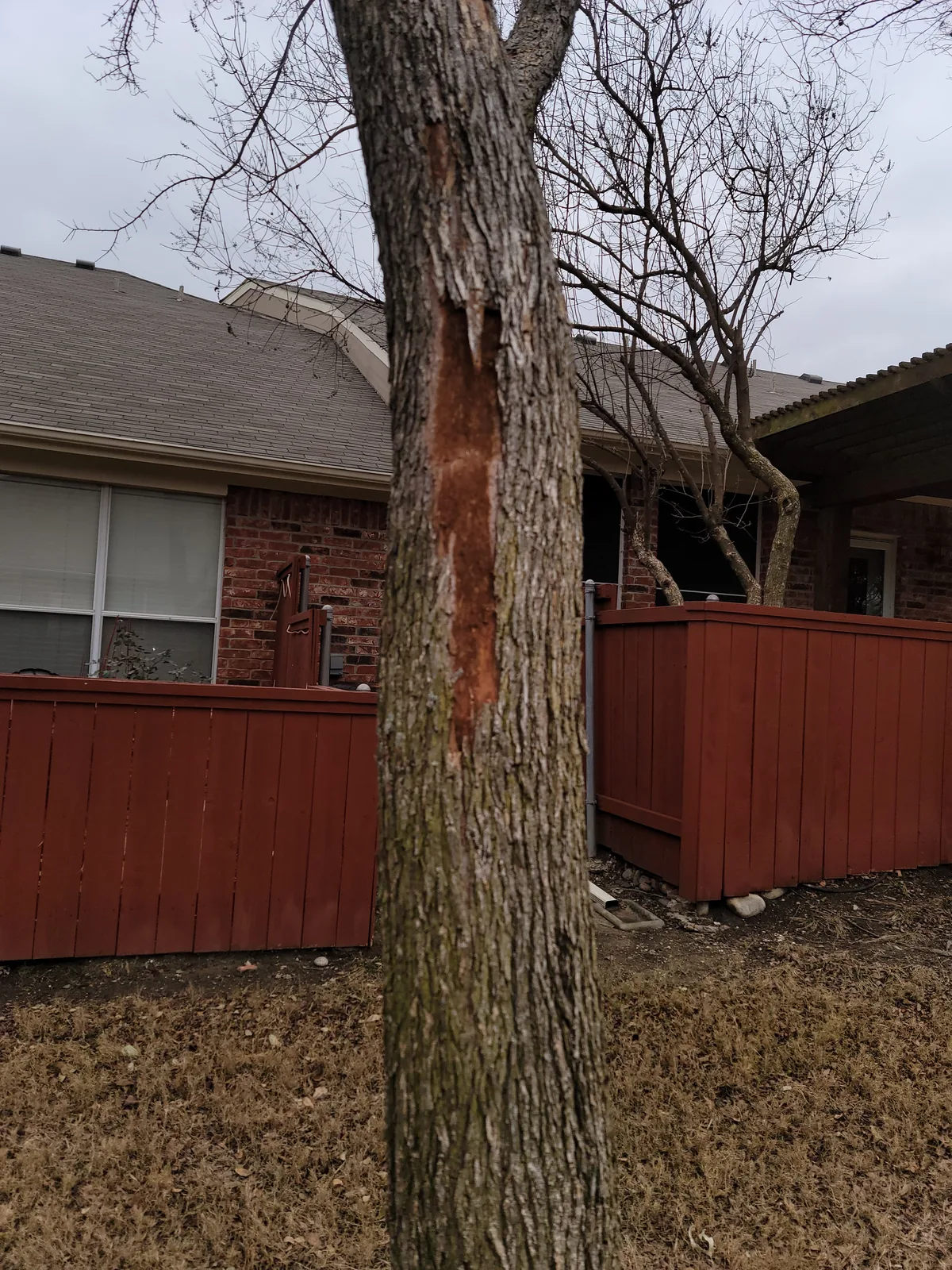
The canker itself is rarely the whole story. It tends to be the visible end of a stress problem that started years earlier. Wood under an active canker can also get brittle, which is why we look at how much of the trunk is involved before we say anything about keeping the tree.
There is no spray for it once it shows. What can be done is decide honestly whether the tree is worth keeping, and take the pressure off the trees around it so they don't follow.
 Texas A&M Forest Service on hypoxylon canker
We would look at how far around the trunk the canker runs, what the crown looks like above it, and whether the root flare is buried. Those three things usually decide it.
Sometimes the answer is that the tree has a few good years left and it is worth keeping. Sometimes it isn't. Either way you get a straight answer before anybody quotes a removal.

Decay changes what hardware can do. A cable has to pull against sound wood, so on a tree with real decay at the union, support usually will not hold the way you would want it to, and we would rather tell you that up front than sell you hardware. It is still your tree and still your call, and we will do the work either way. Sorting it out takes eyes on the tree, and that judgment is a good bit of what you are hiring, 20+ years navigating tricky tree situations. More on our cabling and bracing page.
Arborwise Tree Check walks you through what you can actually see and helps narrow down what deserves attention. Estimates are free and we love talking trees.