Established 2019
A clear, sticky coating on the deck, the cars, or the leaves underneath a tree is usually honeydew. Small insects feed on the tree and pass the sugar straight through. It is a mess more often than it is a problem.
Aphids, scale insects, and a few others feed on sap. What comes out the other end is mostly sugar water, and it falls on whatever is below. That is the sticky film. The black coating that shows up a few weeks later is a mold growing on that sugar, not on the tree.
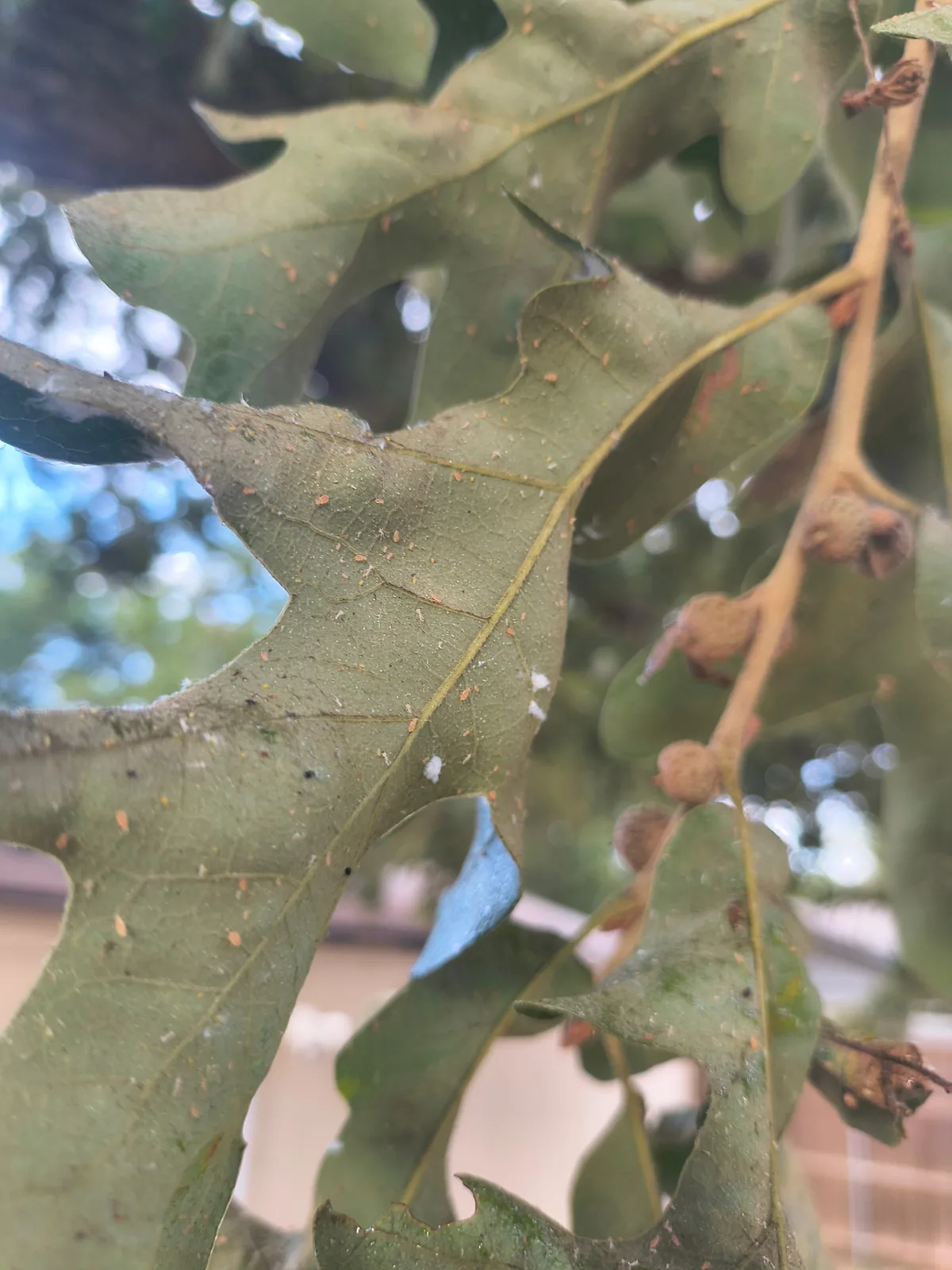
Crape myrtles, pecans, oaks, hackberries and magnolias are some of the trees we see it on most. On crape myrtles in particular, a heavy black coating usually points to a scale insect that has become common across North Texas in recent years.
In most years the insects come and go, the sooty mold washes off eventually, and the tree is fine. Neither one is usually causing structural harm.
What is worth paying attention to is a tree that gets hit hard year after year. Heavy scale over several seasons can thin a tree out and stunt it, and a tree that keeps attracting pests is often telling you it is stressed by something else, like a buried flare, compacted soil, or drought.
 Texas A&M AgriLife on aphids and honeydew
We would identify what is feeding, look at how heavy it is, and then look at the tree itself, because a tree that keeps getting hit is usually stressed by something at the base.
Often the honest answer is that it clears on its own once the insects move on. When it doesn't, there are options, and we can talk through them.

Arborwise Tree Check walks you through what you can actually see and helps narrow down what deserves attention. Estimates are free and we love talking trees.