Established 2019
A big tree near the house is one of the most common worries we hear about. Most of the time the answer isn’t losing the tree. It’s knowing what the roots are actually doing, and where a barrier can go without taking out the roots that hold the tree up.
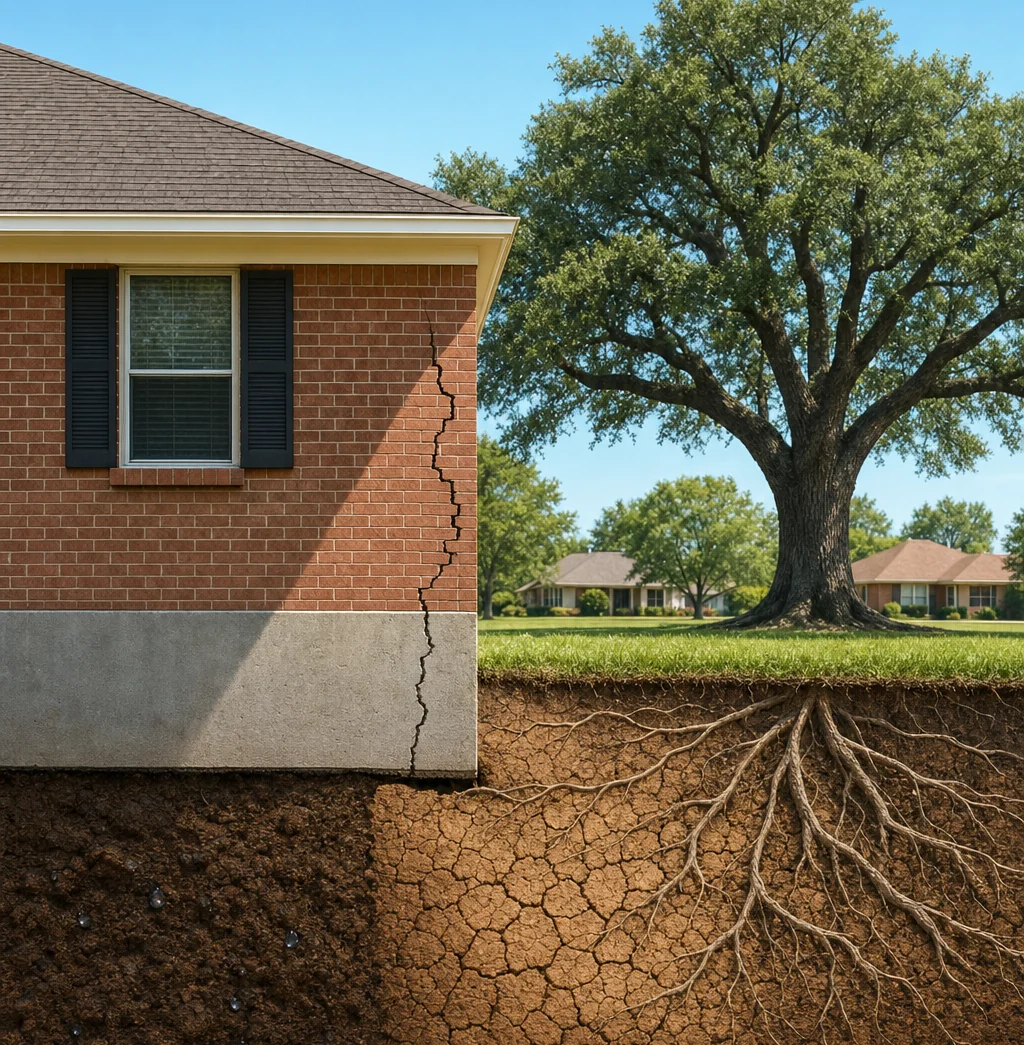
On our Blackland clay, a big tree most often affects a slab by drying out the soil around and under it. Clay shrinks when it dries and swells when it gets wet again, and that uneven movement is what settles and cracks a foundation, more often than a root pushing on concrete.[1]
Texas A&M engineering research describes fine roots pulling water from the clay just ahead of them and opening shrinkage cracks as they go.[2] A study of an Arlington house with a cracked foundation found roots moving toward the slab during drought, following the moisture.[3] That’s good news. It means there are usually options short of losing the tree.
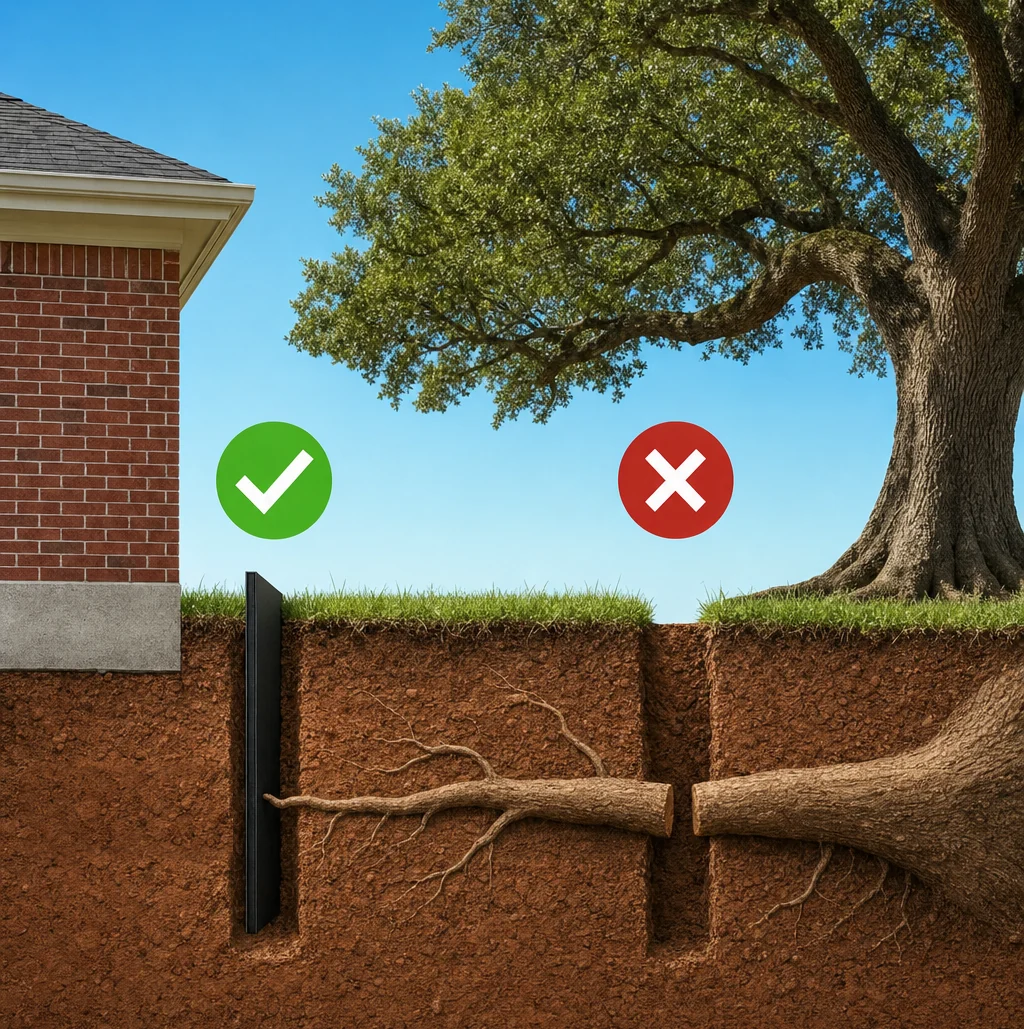
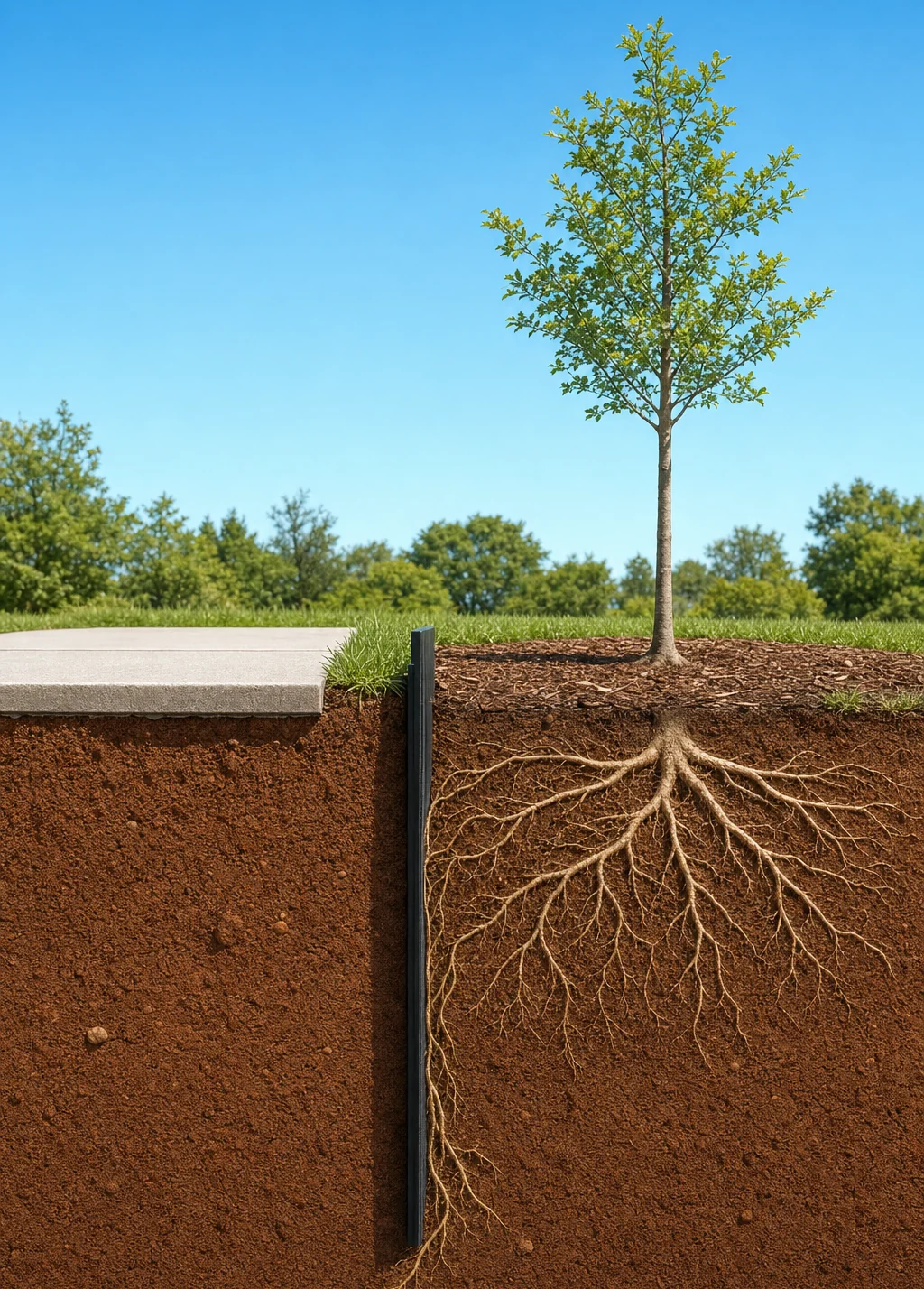
A root barrier is a stiff panel set on edge in a narrow trench. Most have ribs that steer roots down and away from the slab, walk or drive. The panel itself doesn’t hurt the tree. The trench does, because every root in that line gets cut.
That’s why where the trench goes matters more than anything else. Roots get smaller the farther they travel from the trunk, so a trench tight to the house usually cuts fewer, smaller roots. A trench close to the trunk cuts into the big roots that carry water and anchor the tree, and losing those on one side can leave a tree leaning on the roots it has left.[4]
TxDOT’s own tree protection standard sets the critical root zone at one foot of radius for every inch of trunk diameter, measured at four and a half feet off the ground, and keeps trenching out of it except where a plan allows it.[5] It’s a rule of thumb, not a guarantee. Species, soil and how the roots actually run all change the picture, which is why we look before anyone digs. Real roots don’t spread in a perfect circle. They generally follow the shape of the canopy,[5] and the roots closest to the trunk do the most to hold the tree up.[8]
| Trunk across | Critical root zone radius |
|---|---|
| 10 inches | 10 feet |
| 20 inches | 20 feet |
| 30 inches | 30 feet |
| 45 inches | 45 feet |
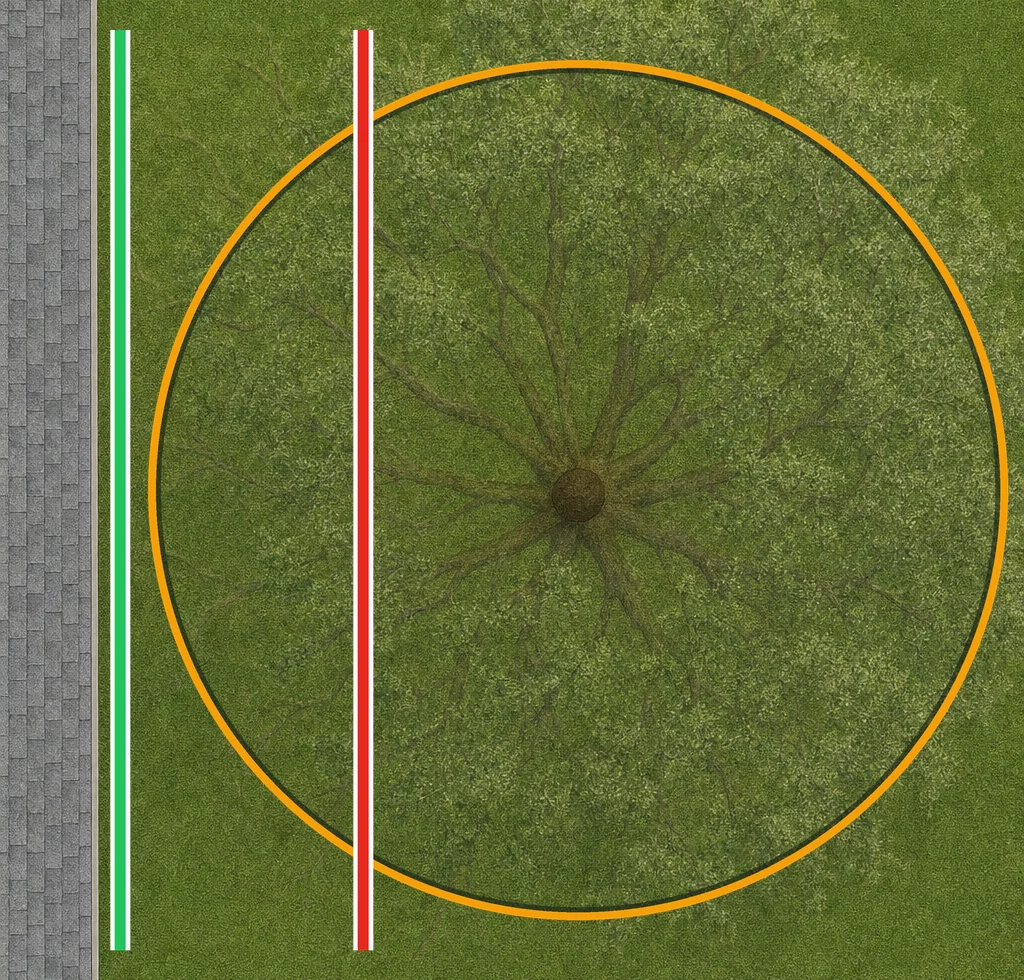
A big tree near a house will often have the slab inside that circle. That doesn’t automatically rule a barrier out. It means the placement, and the way the roots get cut, carry a lot more weight.
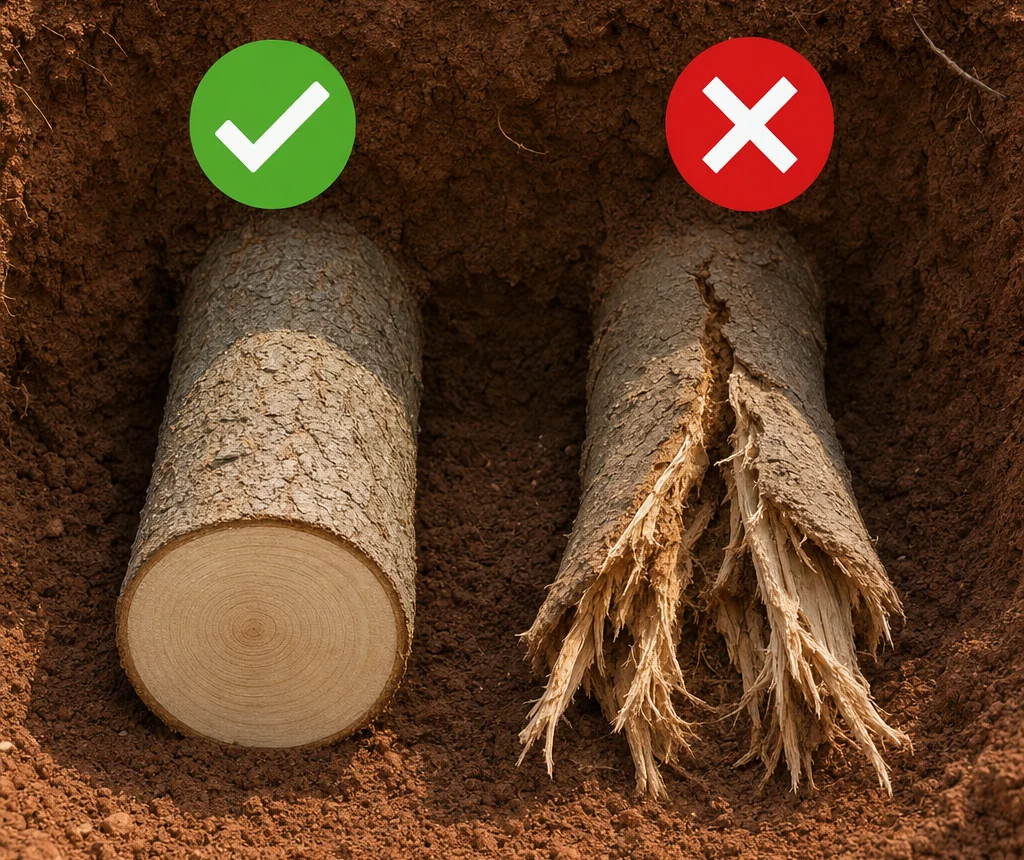
Root work this close to a house can go sideways fast, which is why folks call Arborwise™, with 20+ years of navigating tricky tree situations behind us and an ISA Certified Arborist on staff.
The cheapest root barrier is the one that goes in before there’s anything to cut. Set one when a tree is planted near a drive, walk or slab, and the roots grow around it from day one. Extension guidance says the same: barriers ideally go in before the roots are there.[4]
A lot of North Texas is growing fast, and plenty of young trees are going into smaller yards close to concrete. It’s the one moment when protecting the slab doesn’t cost the tree a thing. Even then, in packed or soggy clay some roots can find their way under a barrier and come up the other side, so placement still matters.[7]
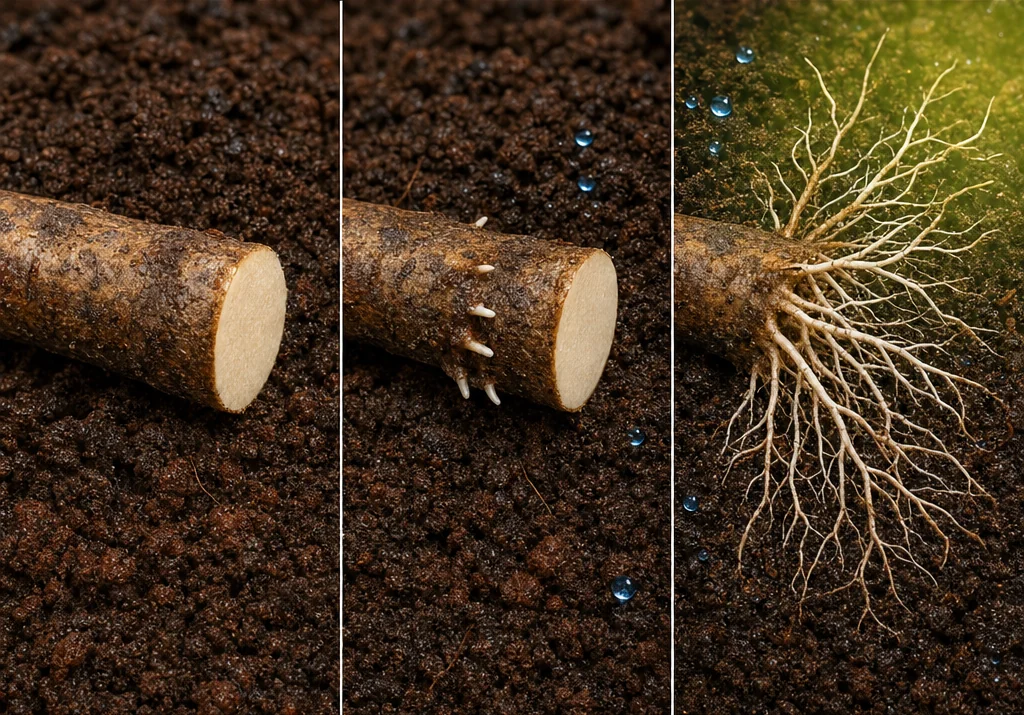
When roots get cut, for a barrier, a new driveway or a utility line, the tree’s job for the next few years is growing new ones. How well it does that usually comes down to water, soil, and somebody keeping an eye on it. University tree protection standards call for a regular watering routine after root work until the tree re-establishes, and for keeping exposed roots from drying out while the trench is open.[6]
It can, because putting one in means cutting every root along the trench line. How much it hurts usually comes down to how close the trench runs to the trunk and how the roots get cut. A barrier set tight to the house, with roots cut clean, is usually much easier on a tree than one dug close to the trunk.
Not always. Roots head where the moisture is, and a watered bed along a house is often the wettest soil in the yard. What matters is how big those roots are by the time they reach the slab and whether the slab is showing movement. That is what we look at on a free walkthrough.
Yes. Our crew handles the whole job: measuring the root zone, opening the trench, cutting roots clean by hand, and setting the barrier. The people cutting the roots are the same people thinking about the tree.
That is always your call, and we will take care of it whichever way you go. Two things are worth knowing first: many North Texas cities protect large trees and may require a permit, and removing a big tree near a slab can bring its own soil movement as the old roots break down. We will give you our recommendation in writing either way.
Yes, and that is usually the best time. Nothing gets cut, and the roots grow around the barrier from the start. When we plant a tree near a drive, walk or slab, we can set the barrier in the same visit.
We’d love to come out for a free walkthrough and lay out your options in writing. We’re happy to answer any and all questions during the free walkthrough, before work starts, during appropriate work stoppages, and after the work is complete.